


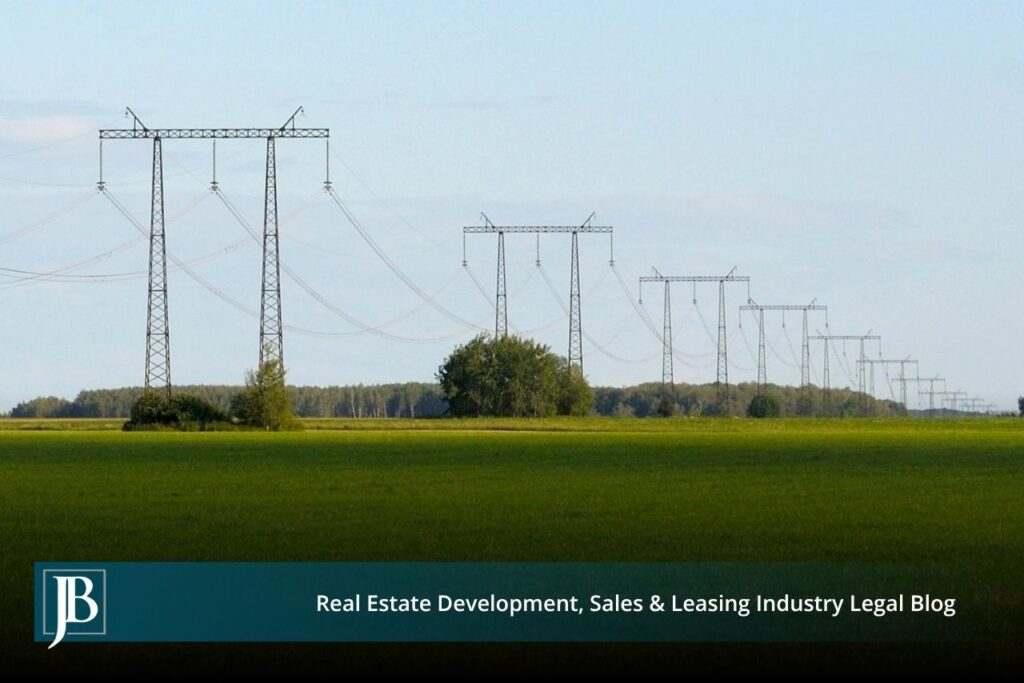
If you own property in Hillsborough County, you may one day open the mailbox to find a letter from Tampa Electric, also known as TECO. The letter might mention a transmission line, a substation, or a “right-of-way” running across your land, and it may include an offer to buy an easement.
For most owners, two words in that letter cause the most confusion: “taking” and “easement.” They sound like opposites. In a Florida eminent domain case, they are closely related, and understanding how they fit together is the single most useful thing you can do before you respond.
This guide breaks down the difference in plain terms, explains what it means for the money you are owed, and shows where the leverage sits.
An Easement Is a Taking, Just Not the Whole Thing
Here is the distinction in one sentence: an easement is a type of taking, not an alternative to one.
When a utility like TECO uses the power of eminent domain to acquire an easement, it is still taking part of your property rights. It just is not taking all of them. You keep title to the land. TECO gets the legal right to use a defined strip for its equipment. Because your rights are being taken, even partially, Florida law treats it as a taking and requires the utility to pay you for it.
So the real question is not “taking or easement?” The real question is: how much of my property is being taken, and what is the full value of what I am giving up?
What Counts as a “Taking” in Florida
A “taking” happens any time the government, or a private entity the government has authorized, uses its eminent domain power to acquire your property or a right in it. The legal term for the court process is condemnation.
Takings come in two basic shapes:
- A full taking (fee simple). The condemning authority acquires complete ownership of a parcel. You no longer own it.
- A partial taking. The authority acquires only a portion of your property or a specific right in it. An easement for a power line is the classic example of a partial taking.
Either way, the Florida Constitution requires payment. Article X, Section 6 of the Florida Constitution guarantees property owners “full compensation,” a standard that is broader and more owner-friendly than the “just compensation” required under federal law. Full compensation is meant to put you in the same financial position you would have been in if the taking had never happened.
If you want a deeper overview of how the firm approaches these cases, our eminent domain practice page and our eminent domain and condemnation issues page are good starting points.
What an Easement Actually Does to Your Land
An easement is a legal right to use a portion of someone else’s property for a specific purpose. When TECO holds a transmission easement across your parcel, it generally can:
- Install, operate, and maintain its lines, poles, and related equipment within the easement area.
- Enter the property to access and repair that equipment.
- Clear trees and vegetation that could interfere with the lines.
- Restrict what you can build or place within the strip.
You keep ownership of the land underneath. You may still be able to use the surface for limited purposes such as parking, landscaping, or agriculture, as long as those uses do not interfere with the utility’s rights. The catch is that the easement is usually permanent and runs with the land, which means it binds every future owner. That is why the exact wording matters so much, and why the boundaries of the strip can become their own dispute. Our work on easements and restrictive covenants, and boundary line disputes often turns on precisely these terms.
Why TECO Is Knocking in the First Place
Tampa Electric serves roughly 2,000 square miles of west central Florida, including most of Hillsborough County, and it continually expands and rebuilds its grid to keep pace with growth. The utility maintains a public list of active work on its current projects page, which it describes as ranging from maintenance of existing infrastructure to the engineering and installation of new transmission and distribution systems.
To build and maintain those lines, TECO needs a corridor of land. Rather than buy your whole property, it typically seeks an easement over the strip it needs. Florida grants electric utilities the power of eminent domain when a project serves a genuine public purpose, so if you and the utility cannot agree, TECO can ask a court to condemn the easement.
The Two Requirements Behind Every Florida Taking
Whether the taking is full or partial, two requirements sit at the center of every case:
- Necessity and public purpose. The condemning authority must show the taking is reasonably necessary for a legitimate public use, such as delivering reliable electricity.
- Full compensation. The owner must be paid the full value of what is taken.
The procedures that govern how a condemnation unfolds are set out in Chapter 73 of the Florida Statutes. Understanding the difference between a full and partial taking matters here because partial takings open the door to a category of damages that owners frequently overlook.
The Money: What “Full Compensation” Includes for an Easement
This is where the taking-versus-easement distinction pays off, literally.
When TECO takes only an easement, your compensation is not limited to the value of the bare strip. Under Section 73.071 of the Florida Statutes, a jury determining your award must consider:
- The value of the property taken. The fair market value of the easement rights themselves.
- Severance damages to the remainder. This is the big one in partial takings. If the easement reduces the value or usefulness of the rest of your land, you are entitled to recover for that loss. A transmission corridor cutting across a developable parcel, for example, can shrink the value of everything around it, not just the strip under the wires.
- Business damages. If you operate an established business on the property and the taking harms it, you may be able to claim lost business profits. The business generally must have operated at that location for more than five years before the taking.
Because severance and business damages can dwarf the value of the strip alone, how your property is appraised and presented makes an enormous difference. The utility’s first offer is almost always built on the narrowest view of value. If your parcel is mid-development or improved, our experience with complex real property improvement issues and construction law in real estate litigation frequently comes into play.
How the Process Usually Unfolds
While every project differs, TECO easement acquisitions tend to follow a familiar path:
Notice and survey. TECO identifies a route and contacts affected owners. Agents may ask permission to survey.
The offer. The utility makes a written offer based on its own appraisal. You are not required to accept it, and you have the right to your own appraisal.
Negotiation. Most matters resolve here. This is the stage where severance and business damages can substantially raise your recovery.
Condemnation lawsuit. If no deal is reached, the utility files suit. Florida allows a “quick-take” procedure for many takings, which lets the condemning authority deposit its estimate of value with the court and take possession before the final amount is decided.
Determination of compensation. If the case does not settle, a jury decides full compensation. Any gap between the deposit and the final award is paid to you, sometimes with interest.
Because quick-take can move faster than owners expect, getting advice early, before the deposit is made, carries real value.
The Detail That Surprises Almost Everyone: TECO Usually Pays Your Legal Fees
One feature of Florida law catches nearly every property owner off guard. Under Section 73.092 of the Florida Statutes, the condemning authority is generally responsible for the owner’s reasonable attorney’s fees, and Chapter 73 also requires it to cover reasonable costs such as appraisal fees and, where business damages are involved, accountant fees.
Attorney’s fees in these cases are typically calculated on the “benefit achieved,” meaning the difference between the utility’s last offer before you hired counsel and the amount finally recovered. The practical effect is significant. Hiring experienced counsel to pursue full compensation often costs an owner little or nothing out of pocket, because the fee is based on, and paid for by the additional value the attorney secures. This is the opposite of how legal fees work in most disputes, and it is a strong reason not to simply sign the first offer.
Negotiating the Easement Terms, Not Just the Price
Compensation is only half the picture. The easement document controls how the corridor affects your land for decades, so the terms deserve as much attention as the dollar figure. Careful negotiation can address:
- The exact width and location of the easement is so that it interferes as little as possible with the rest of your parcel.
- Limits on TECO’s rights, such as restrictions on access points, vegetation removal, and where structures may be placed.
- Your retained rights to use the surface for parking, farming, or similar uses that do not interfere with the lines.
These terms intersect with several other areas of real estate law. Owners untangling competing claims or title problems may also need help with quiet title issues, partition issues, slander of title issues, or correcting instruments and agreements. Commercial owners and tenants face added wrinkles, because a taking can trigger questions under a lease, including disputes involving easements, facility usage, signage, and security matters, and in some cases, related property damage can implicate a commercial property insurance claim. Where a corridor unsettles possession or competing occupancy, ejectment issues can also surface.
Common Mistakes to Avoid
A few missteps come up again and again:
- Treating the easement as harmless because you keep the land. A partial taking still reduces your property rights, and you are owed for that reduction.
- Accepting the first offer. Initial offers rarely reflect severance and business damages.
- Signing the easement without legal review. The terms are permanent and often more favorable to the utility than they need to be.
- Assuming you must pay your own legal fees. In most takings, the condemning authority does.
- Waiting too long. Quick-take procedures and survey requests can move quickly.
What to Do If TECO Contacts You
If you receive an offer or notice tied to a Tampa Electric project in Hillsborough County, keep every document, avoid signing anything before you fully understand it, and consider getting an independent appraisal. Because Florida law shifts attorney’s fees and costs to the condemning authority in most takings, an early conversation with counsel carries little downside and can meaningfully increase what you recover.
Jimerson Birr represents property owners and businesses across the Tampa region in eminent domain and related real estate matters. If a TECO transmission project affects your land, our eminent domain attorneys can help you evaluate the offer, negotiate the easement terms, and pursue the full compensation Florida law promises.