


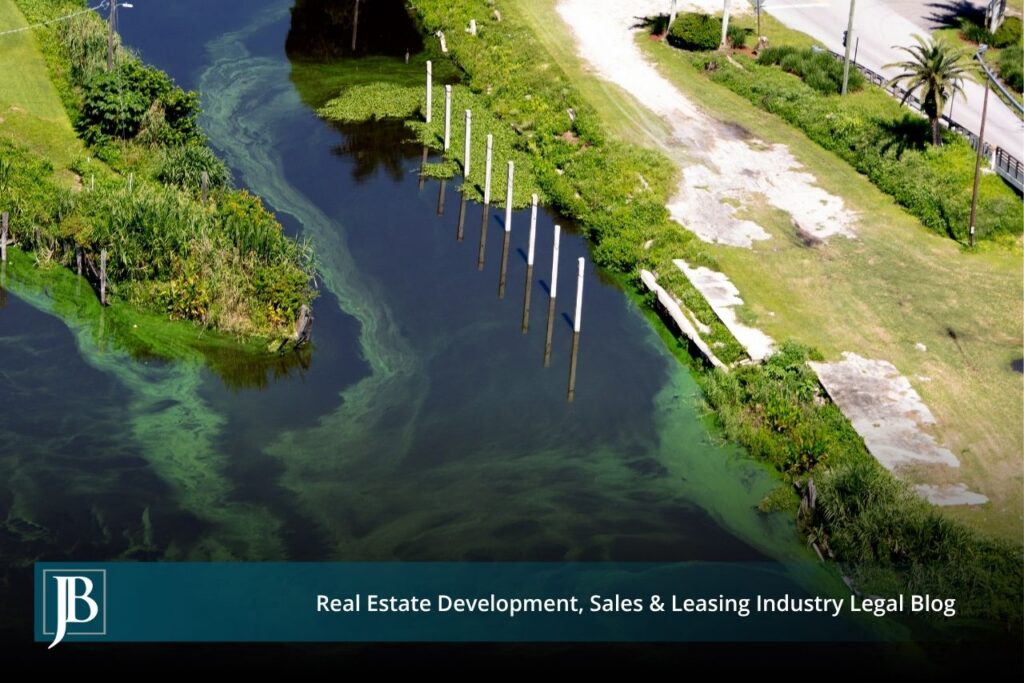
Florida is in the middle of one of the largest environmental rebuilds in the country, and a good deal of it runs through or feeds the water system that South Florida depends on. The Lake Okeechobee Watershed Restoration Project is one of the headline pieces. Projects of this size do not happen on government land alone. They require private property, and that is where the law of eminent domain enters the picture for Florida landowners.
If you own real estate in Miami or anywhere in Dade County, you may wonder why a restoration project north of the lake matters to you. The short answer is that the same legal rules and the same agencies that drive these projects can reach property across South Florida, and the protections that apply to a rancher near the lake are the protections that apply to you. Knowing how the process works and what “full compensation” actually means is the difference between accepting a first offer and getting paid what your property is worth.
This post breaks down the project, explains how Florida eminent domain law works in plain terms, and shows where an owner can push back. For a deeper overview of the firm’s work in this area, see our Florida eminent domain practice.
What the Lake Okeechobee Watershed Restoration Project Is
The Lake Okeechobee Watershed Restoration Project, often shortened to LOWRP, is a component of the larger Comprehensive Everglades Restoration Plan. It is being planned and advanced jointly by the U.S. Army Corps of Engineers and the South Florida Water Management District, the state agency that manages water across a sixteen-county region that includes Miami-Dade.
The goal is to store and clean water north of Lake Okeechobee so that less polluted water gets dumped into the St. Lucie and Caloosahatchee estuaries during the wet season, and so more water is available when it is dry. The recommended plan centers on roughly 55 aquifer storage and recovery wells, which pump water underground for later use, plus the restoration of about 5,900 acres of wetlands along the historic Kissimmee River floodplain. The Army Corps of Engineers Jacksonville District leads the federal side of the effort, and the State of Florida has committed substantial funding to move it forward.
Here is the part that touches property owners. Wells, reservoirs, wetlands, levees, and the access needed to build and maintain them all have to sit somewhere. When a public agency decides it needs land it does not own, it can buy it on the open market, or it can use eminent domain to take it.
Why a Restoration Project Means Land Acquisition
Large water projects are land hungry by nature. A single storage feature can span thousands of acres, and the supporting infrastructure, including canals, pump stations, and maintenance roads, spreads the footprint even wider. Agencies prefer to negotiate voluntary purchases, but when an owner will not sell or the parties cannot agree on price, the agency can turn to its condemnation power.
That power is not limited to the agency leading a particular project. In Florida, the State water management districts, counties, municipalities, and certain utilities all hold eminent domain authority. For Miami and Dade County owners, the practical takeaway is that condemnation is not a remote, up-north problem. Road widenings, drainage and flood control work, utility corridors, and regional water projects all draw on the same legal toolkit. If you want a focused look at the issue in the real estate context, our overview of eminent domain and condemnation issues is a good starting point, and it sits within our broader real estate transactions and disputes practice.
Eminent Domain in Florida: The Ground Rules
Eminent domain is the government’s power to take private property for public use. In Florida, that power comes with two hard requirements built into the state constitution. Under Article X, Section 6 of the Florida Constitution, no private property may be taken except for a public purpose, and the owner must receive full compensation.
Two points are worth slowing down on.
First, the taking has to serve a genuine public purpose. Water storage, flood control, and environmental restoration comfortably qualify. After the U.S. Supreme Court allowed takings for private economic development in 2005, Florida tightened its own rules so that property generally cannot be condemned and then handed to a private party for private development. That reform gives Florida owners more protection than the federal baseline.
Second, Florida’s standard is “full compensation,” not the “just compensation” you see in the federal Constitution. The difference is not just wording. Florida courts read full compensation to cover more than the raw value of the dirt, and that broader definition is what makes hiring counsel so valuable to owners.
Full Compensation Means More Than the Land
When people hear “fair market value,” they assume the conversation begins and ends with what the parcel would sell for. In a Florida condemnation, it goes further. The procedures live in Chapter 73 of the Florida Statutes, and they are built in several categories of recovery that owners often miss:
- Severance damages. If the agency takes only part of your property, you can be compensated for the loss in value to the portion you keep. A taking that splits a parcel or strands a remainder can do real damage to what is left, and that damage is compensable.
- Business damages. Florida is one of the few states that allows certain established businesses to recover for damage to the business itself caused by a partial taking, not just for the real estate. This is a meaningful and often overlooked category for owners who operate on the condemned land.
- Attorney’s fees and costs. In most Florida eminent domain cases, the condemning authority pays the owner’s reasonable attorney’s fees and litigation costs, including appraisal and expert fees. Fees are generally tied to the benefit the lawyer obtains above the agency’s offer. In plain terms, retaining experienced counsel usually does not come out of your compensation the way it would in a typical lawsuit.
That last point is the one owners should not forget. Because the agency typically bears the cost of the owner’s fees and experts, there is little downside to having the offer reviewed and challenged. The system is designed so that an owner can fight for the right number without being penalized for it. Disputes about what the land and the remainder are actually worth often overlap with complex real property improvement issues and with easements and restrictive covenants that affect value.
Quick-Take: How the Government Can Take Possession Early
One feature of Florida law surprises owners more than any other. Under the “quick-take” procedure in Chapter 74 of the Florida Statutes, a condemning authority can obtain a court order of taking and take possession of the property before the final amount of compensation is decided. The agency deposits its estimate of value with the court, and the owner can generally withdraw that deposit while the fight over the true value continues.
This is why timing matters so much. By the time many owners think to call a lawyer, the agency may already be moving toward an order of taking. The earlier counsel is involved, the more room there is to challenge the necessity of the taking, scrutinize the appraisal, document business damages, and preserve every argument for a higher award.
What Miami and Dade County Property Owners Should Watch For
Even though LOWRP itself sits north of the lake, the lessons travel south. Miami-Dade is crisscrossed by public works that rely on eminent domain, and the South Florida Water Management District operates throughout the county. Owners here should pay attention to a few signals:
- A letter or call from a government agency or its right-of-way agent asking to appraise or survey your property.
- A written purchase offer framed as routine, especially one that asks you to respond quickly.
- Public notices about road, drainage, utility, or water management projects near your parcel.
- Any request for access to your land “for planning purposes.”
None of these mean you have to accept what is offered. They mean the clock may be starting. If a project clouds your title or creates a boundary or access problem, related tools such as quiet title actions, boundary line disputes, and ejectment claims may come into play alongside the condemnation itself. Our Miami office handles these matters for owners across Dade County.
Practical Steps If You Receive a Condemnation Notice
If an agency contacts you about acquiring your property, a few habits protect your position:
- Do not sign or agree to anything on the spot. An initial offer is a starting point, not a final number.
- Keep every document. Letters, offers, appraisals, surveys, and emails all matter later.
- Get your own valuation. The agency’s appraisal reflects the agency’s interests. An independent appraisal often tells a different story, and the cost is frequently recoverable.
- Document any business on the property. If you run a business on the land, your records may support a separate business damages claim.
- Call counsel early. Because the authority usually pays reasonable fees and costs, early legal review tends to add value rather than subtract it.
Owners who are mid-transaction or who hold property through complex arrangements should also keep an eye on related issues such as mortgage foreclosures, lien foreclosures, partition of co-owned property, and the correction of instruments and agreements, all of which can intersect with a taking. Where a project disrupts a commercial site, our experience with retail, office, industrial, and multi-residential transactions and with construction issues in real estate litigation helps put a full value on the loss.
The Bottom Line for Florida Owners
The Lake Okeechobee Watershed Restoration Project is good policy for Florida’s water and a reminder of a basic truth about public works: they are built on land, and a lot of that land is privately owned. Florida law gives owners a strong hand. The constitution guarantees full compensation, the statutes define recovery broadly enough to include severance and business damages, and the fee-shifting rules let owners challenge low offers without paying out of pocket in most cases.
The catch is that the protections only help owners who use them, and the quick-take process rewards owners who move early. If you own property in Miami or Dade County and a government agency has contacted you, or you simply want to understand your exposure before a project reaches you, our Florida eminent domain attorneys are ready to review your situation and protect what your property is truly worth.