


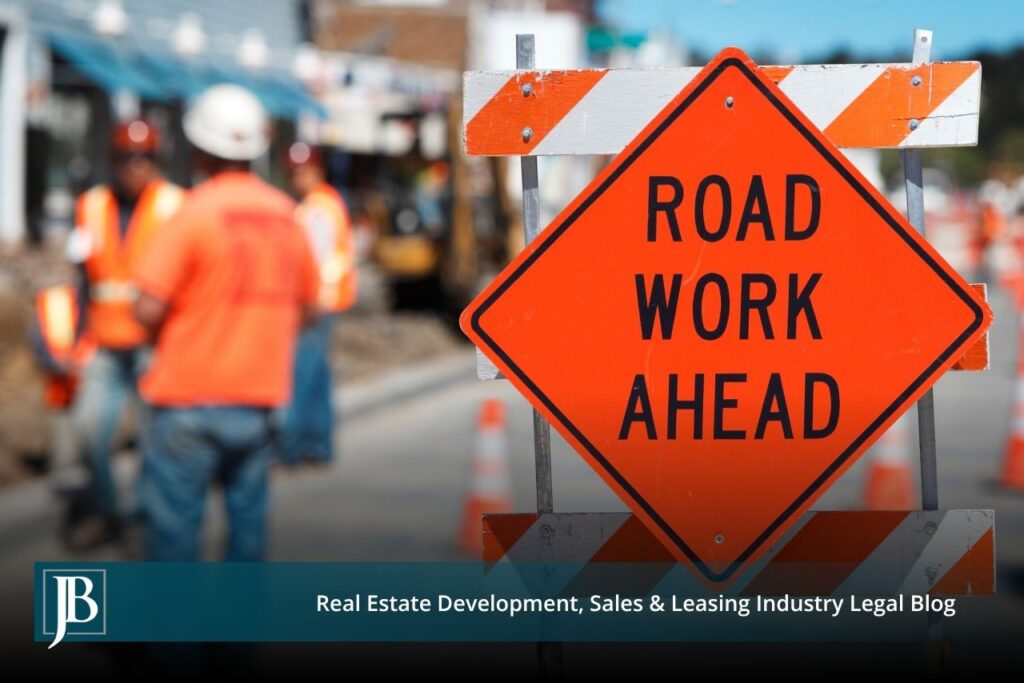
State Road 7, also signed as US 441, is one of South Florida’s busiest north-south corridors. The Florida Department of Transportation (FDOT) is in the middle of a multi-year push to widen and modernize it, adding lanes, bicycle and pedestrian facilities, drainage, and signal upgrades across Broward County and Palm Beach County. When a road gets wider, the state often needs more land. That land usually comes from the businesses, landlords, and homeowners who line the route.
If you own property near SR-7, there is a real chance you will hear from FDOT. And if negotiations do not close the gap, you may be served with a court document called an Order of Taking. This guide walks you through what that document is, what each part means, and the deadlines that matter, so you can react from a position of knowledge rather than panic.
If you would rather skip straight to talking through your specific parcel, our Florida eminent domain attorneys handle exactly these cases.
The short version
Here is what every SR-7 property owner should know up front:
- An Order of Taking lets FDOT take title to and possession of your property before a court has decided what your property is actually worth.
- To do that, FDOT must deposit a good-faith estimate of value into the court registry.
- That deposit is not your final payment. You can usually withdraw it and still fight for more.
- Florida law entitles you to full compensation, and the condemning authority generally pays your reasonable attorney’s fees and costs.
- The clock is short. Some rights are waived if you do not respond in time.
Why SR-7 owners are getting these notices now
FDOT’s District Four is actively building out the SR-7 and US-441 corridor. The published scope of work includes resurfacing, roadway widening to fit five-foot bicycle lanes, new sidewalks, upgraded curb ramps, and improved signage and drainage. Project timelines stretch across multiple construction seasons, with active work running into 2026.
Widening a road that is already developed on both sides is the hard part. FDOT frequently needs slivers of frontage, corners for turn lanes, drainage easements, or temporary construction easements. For a commercial owner, even a narrow strip can cost parking spaces, signage, or access. That is why the legal process around these takings matters so much, and why the dollar figure on the first offer is rarely the end of the story.
What an “Order of Taking” actually is
Florida has two tracks for government takings. The general procedure lives in Chapter 73 of the Florida Statutes. The faster track, used by FDOT in almost every road project, lives in Chapter 74 and is known as “quick-take.”
Under quick-take, the government does not have to wait for a full trial on value before it starts building. Instead, it files paperwork, deposits money with the court, and asks a judge to enter an Order of Taking. Once the order is entered and the deposit is made, title and possession shift to FDOT. The fight over how much you are owed continues afterward.
This is constitutional only because Florida requires the government to pay. Article X, Section 6 of the Florida Constitution says private property cannot be taken except for a public purpose and with full compensation paid to the owner. Quick-take speeds up the timing of the taking. It does not erase your right to be paid fully.
How to read the document, part by part
An Order of Taking packet can run dozens of pages. Most of it falls into a few buckets.
The petition and declaration of taking
The petition is the lawsuit. It names you as a defendant and describes the public project. The declaration of taking is the document where FDOT formally states it is appropriating your property. Under section 74.031, that declaration must include a good-faith estimate of value based on a valid appraisal of each parcel. In plain terms: somewhere in the packet is a number, and that number is supposed to be backed by an appraisal you can request and scrutinize.
Treat that appraisal as the opening move, not the verdict. Government appraisals routinely undervalue access loss, severance damage to the remaining land, and business impacts.
The summons to show cause
This is the part with a deadline. Section 74.041 requires FDOT to serve you with a summons to show cause, telling you the date it will ask the court for the Order of Taking. That summons must reach you not less than 20 days before the hearing date. If you want to be heard before the judge decides, you generally must speak up before that date.
The hearing on the Order of Taking
Section 74.051 controls what happens next. If you request a hearing, you can challenge several things before the order is entered, including:
- whether the court has jurisdiction,
- whether the pleadings are sufficient,
- whether FDOT is properly using its delegated authority, and
- the amount of the deposit the court should require.
Here is the trap. If you do not request a hearing, you waive the right to object to the Order of Taking, and title vests in FDOT once the deposit is made. Silence is treated as consent to the taking itself.
When a hearing is held, the judge sets a deposit amount that will, in the words of the statute, “fully secure and fully compensate” the owner as ultimately determined by final judgment. For a state agency like FDOT, the deposit is at least its own estimate of value.
Vesting and the deposit
Section 74.061 is blunt: the moment FDOT makes the deposit, title vests and the land is considered taken. Your right to compensation attaches to the money instead of the dirt. Note one more deadline buried in section 74.051: if FDOT does not make the required deposit within 20 days of the order, the order becomes void.
The deposit is not your final check
This is the single most misunderstood point, so it deserves its own section.
Section 74.071 lets you ask the court to release the deposited estimate to you while the case continues. You can take that money and keep litigating for full compensation. If the final judgment comes in higher than the deposit, FDOT pays the difference, with interest on the shortfall under section 74.061. If the final number somehow comes in lower, you may have to return the excess.
So accepting the deposit does not mean accepting FDOT’s valuation. It means you are not leaving your own money sitting in the court registry while your case plays out. The decision of whether and when to withdraw it is strategic, which is one reason it is worth discussing with counsel before you act.
What “full compensation” actually includes
Lay owners often assume compensation equals the raw value of the strip being taken. Florida law reaches further. Under section 73.071, a jury determines compensation, which can include:
- the value of the property actually taken,
- severance damages to the land you keep, when a partial taking reduces the value of the remainder, and
- business damages in qualifying cases where an established business on the property is harmed.
For a commercial owner on SR-7, severance and business damages are frequently larger than the value of the land itself. A lost row of parking, a relocated entrance, or reduced visibility can hammer the value of what remains. These are exactly the issues our team digs into when we evaluate eminent domain and condemnation matters.
You usually do not pay your attorney out of pocket
Florida’s eminent domain statutes are unusually owner-friendly on fees. Under section 73.091, the condemning authority pays your reasonable costs of defending the case, including appraisal fees and, where business damages apply, accountant’s fees. Under section 73.092, the authority also pays your attorney’s fees, calculated on the benefits achieved, meaning the difference between the final result and FDOT’s last written offer before you hired counsel.
In practical terms, the system is built so that property owners can afford skilled representation precisely because the government foots much of the bill when that representation produces a better result. That structure is a big reason it rarely makes sense to negotiate a road taking alone.
Before negotiating, FDOT must try in good faith
You are not supposed to be ambushed. Section 73.015 requires the condemning authority to attempt good-faith presuit negotiation before filing, including a written offer and, on request, a copy of the appraisal the offer is based on. If you received a letter and an offer before any lawsuit, that was this step. It is also your first window to push back with your own evidence of value.
What to do if an SR-7 Order of Taking lands on your desk
A short, practical checklist:
- Note every date. Find the show-cause hearing date and count backward. Twenty days goes fast.
- Do not assume the offer is fair. The first number reflects FDOT’s appraisal, not necessarily your loss.
- Preserve your business records. If you operate on the property, your books may support a business-damage claim.
- Get an independent appraisal. A qualified appraiser who understands partial takings is essential.
- Talk to counsel early. Because the authority generally pays reasonable fees and costs, the cost barrier is lower than owners expect, and early involvement protects deadlines.
Many of the disputes that grow out of road projects are not only about the taking itself. They spill into easements and restrictive covenants, boundary line questions, access and complex real property improvement issues, and sometimes quiet title or partition matters when ownership is shared. Where an established business is hit, the loss can also raise business litigation and valuation questions that go well beyond the strip of land on the survey.
Why this matters for Broward and Palm Beach owners
The SR-7 corridor runs through dense, developed neighborhoods and commercial districts. That density is precisely why takings here tend to be contested. Frontage is valuable, parking is tight, and access is everything for retail, office, and service tenants. Owners who treat the first FDOT letter as a take-it-or-leave-it offer often leave significant money on the table. Owners who understand the Chapter 74 process, and who line up their own appraisal and counsel early, are positioned to recover what the constitution actually promises.
For owners weighing development or redevelopment near the corridor, the same issues touch real estate transactions and disputes broadly, as well as economic development and government incentive planning and, in some cases, governmental relations and advocacy before a project is finalized.
How Jimerson Birr can help
Our firm represents Florida business owners, landlords, and property holders facing condemnation, and we serve clients across South Florida from our Miami office. We read the Order of Taking the way FDOT does, then we build the case for full compensation: independent appraisals, severance and business-damage analysis, and aggressive negotiation backed by trial readiness.
If you want a deeper look at owner strategy, start with our overview of legal strategies Florida homeowners can use to fight eminent domain, then visit our eminent domain law page to see how we approach these matters.
An Order of Taking is intimidating by design. But it is also the start of a process that Florida law tilts toward paying you fairly. The owners who do best are the ones who read the document carefully, calendar the deadlines, and get help before the show-cause date passes.