


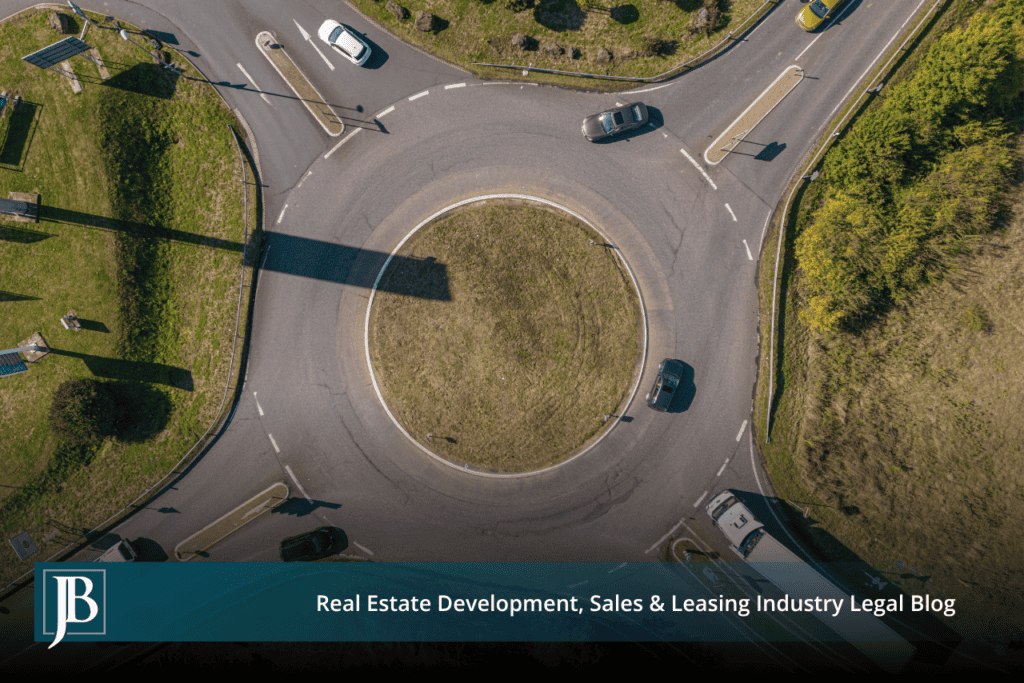
A roundabout project on SR 434 in Seminole County carries $32,401,000 programmed to buy private right of way, and in the work program adopted July 1, 2026 every dollar of it shows zero authorized and zero committed. Seminole County and FDOT District Five are still finalizing the design. Programmed acquisition with no funded construction means no letting date is forcing a fast number.
The clock that decides your outcome is not the construction schedule, it is the 30 days that start when the notice reaches you. Under section 73.015(1)(b), Florida Statutes, you get at least 30 days after you receive the notice, or after it is returned undeliverable, to respond before a proceeding can be filed on that parcel. Subsection (1)(c) is the trap: notice goes by certified mail to your address on the county ad valorem tax roll, and a return as undeliverable “constitutes compliance.”
Our Florida eminent domain attorneys represent owners and businesses against FDOT, counties, cities, and utilities.
What Is the SR 434 Roundabout Project?
Seminole County, in partnership with FDOT District Five, is finalizing the design of three roundabouts on SR 434 between Jetta Point, just west of SR 417, and Artesia Street, located at Mactavandash Drive, Hammock Lane, and Artesia Street (Seminole County Public Works, SR 434 Roundabouts, CIP No. 01785145).
Two published details matter more to a business than the roundabouts:
- The design adds a continuous shared-use path on the south and west side and a shared-use path plus sidewalk on the north and east side, connecting to the Cross Seminole Trail. On a built-out corridor that width comes from the frontage, and the frontage is where parking and driveways sit.
- The county states plainly: “Changes to access management will occur upon construction of this project.”
As of the county’s project page, the project had reached 60 percent design and entered an FDOT-led Value Engineering phase whose outcome “will help determine the direction of future improvements for the project.” Confirm the current phase with the county. Either way, your driveway sits inside a design that is not final.
Has the Land Been Bought Yet?
No. The acquisition is programmed, partly funded, and unstarted. FDOT’s work program lists item 446491-2 as “adopted, not begun,” and every acquisition line shows zero authorized and zero committed.
| Right-of-way phase | State fiscal years | Programmed |
|---|---|---|
| Land purchase | 2027, 2029, 2030, 2031 | $32,401,000 |
| Acquisition services and consultant | 2029, 2030, 2031 | $4,095,468 |
| Relocation | 2029 | $68,959 |
| Total | $36,565,427 |
Figures come from the Detail worksheet of FDOT’s Adopted Work Program 07/01/2026 (B), filtered to item 446491-2. State fiscal year 2027 runs July 1, 2026 through June 30, 2027, so the first $13,404,000 sits in the current fiscal year. The file notes acquisition is managed by FDOT and that right of way is not fully funded, and it carries no construction phase and no minimum construction year.
The $68,959 relocation line indicates the design anticipates at least one displacement. Part of the purchase money is coded local funds, so your condemning authority may be FDOT or the county. The framework below applies either way, because chapters 73 and 74 list counties alongside FDOT.
Why You Will Not See This Coming on FDOT’s Website
As of August 2026, FDOT District Five’s public project site has no page for item 446491-2. Its SR 434 index lists seven other projects and none is the roundabouts, so the page a Seminole County owner would naturally check says nothing about the $32.4 million programmed to buy land on their street.
Farther west on the same highway, item 439040-1, SR 434 at CR 427 in Longwood, shows the next stage: status “contract executed,” with $5,719,924 of its $6,201,835 in land purchase money already authorized. Once a project reaches that point, a design-phase owner’s leverage is largely gone. See major FDOT projects in Central Florida and which Volusia County projects are buying land and when.
How Do Roundabouts Change Access and Parking?
A roundabout redesigns the curb, and the curb is where a commercial site earns its money. The strip taken is thin; the damage is what it does to the operation left behind. The plans are not posted online, so these are the five items to check once you obtain them:
- Driveway movements. Splitter islands and raised medians commonly convert a full-access driveway to right-in, right-out. A restaurant or fuel stop that loses its left-in loses part of its trade area.
- Parking count. Frontage taken for pavement, sidewalk, and path can drop a site below the local code minimum, creating nonconforming status or forcing a site plan amendment. Our land use and zoning team handles that.
- Truck geometry. Tighter radii and a narrowed apron can kill a delivery turn that works today.
- Drive-through stacking. Move the right-of-way line inward and a queue that met franchise standards no longer fits.
- Signage and sight lines. A relocated pole sign or a new island across your frontage is a valuation issue, not a cosmetic one.
For the full treatment, see what happens to access, parking, and other business-critical features in a taking. Tenants, read the lease too: access and signage rights are allocated there. See disputes involving easements, facility usage, and signage and our commercial leasing practice.
What Does Florida Have to Pay You?
Under section 73.071(3), Florida Statutes, a jury awards the value of the property taken plus, on a partial taking, damages to the remainder. Lost parking, impaired access, blocked visibility, and rerouted drainage live in that second bucket, called severance damages.
Appraisals are ordinarily developed on a highest and best use basis, not current use. Cost-to-cure items belong in the claim too, including replacement parking, restriping, drainage, sign relocation, and temporary construction easements. A condemnor’s appraisal does not always include them: see common deficiencies in eminent domain appraisals.
Here is the counterweight nobody volunteers. Under section 73.071(4), on a road right-of-way taking by FDOT, a county, a municipality, a board, a district, or another public body, any enhancement in your remaining adjoining land caused by the improvement is offset against your remainder damages. It never applies against the value of the land taken, and the condemnor cannot collect if enhancement exceeds damages. Expect the authority’s appraiser to argue a roundabout improved your access.
Can a Seminole County Business Recover Business Damages?
Yes, if it qualifies. Section 73.071(3)(b) requires a partial right-of-way taking by FDOT, a county, a municipality, a board, a district or other public body, and a business owned by the party whose land is taken, sitting on adjoining land that party owns or holds, established more than five years for takings on or after January 1, 2005. Tenants should have counsel test whether their leasehold qualifies.
The deadline is what actually kills these claims. Under section 73.015(2)(c), a qualifying business must send a good faith written business damage offer by certified mail within 180 days after receiving the business owner’s notice, after it is returned undeliverable, or by a later agreed date. Under (2)(c)1. it must be prepared by the owner, a CPA, or a qualified business damage expert. Absent good faith justification the court must strike the claim; if you show it, the court must grant up to 180 more days.
See an introduction, calculating and proving, and resolving business damage claims.
Who Pays Your Attorney?
The condemning authority does, and it does not take a lawsuit. Section 73.015(4) lets an owner who settles presuit on a road right-of-way taking by a public body recover fees calculated as in a filed case. Section 73.092(1)(c), Florida Statutes sets the schedule: 33 percent of any benefit up to $250,000, 25 percent of any portion between $250,000 and $1 million, and 20 percent above $1 million. Section 73.092(1)(a) defines that benefit as the difference, exclusive of interest, between the final judgment or settlement and the last written offer made before you hire an attorney.
Because the baseline is the last offer you field alone, every round you negotiate by yourself raises it, shrinking the benefit your fee award is calculated from. Business damages are measured against a different baseline under section 73.092(1)(a), and which one applies turns on whether you produced your ordinary-course business records.
See recovery of attorney fees and how early legal action can limit a taking. Contact Jimerson Birr before you respond to a first offer, not after.
What Should SR 434 Owners Do Now?
- Ask which item number carries the right-of-way phase for your parcel, not what the construction project is doing.
- Get the current design plans. They are not posted online, so request them from Seminole County under chapter 119. While the footprint is moving, a driveway location is an engineering question, not a damages question.
- Do not sign anything, including a right-of-way agreement, an easement, or a survey permission form.
- When the notice and offer arrive, request the appraisal and plans. Under section 73.015(1)(a)3., within 15 business days the authority must provide the appraisal the offer is based on, plus right-of-way maps and construction plans to the extent prepared.
- Calendar the 180-day business damage deadline the day the business owner’s notice under section 73.015(2) arrives, not the day a landowner offer arrives.
- Photograph parking counts, driveway movements, signage, and truck paths now.
- Get an independent valuation before you respond. See what landowners need to know before accepting an offer.
Seminole condemnation actions are filed in the Eighteenth Judicial Circuit, covering Brevard and Seminole counties, with Seminole civil matters heard in Sanford. Because a condemnor can take possession and title before compensation is resolved, read the quick-take process under chapter 74 and how to read an order of taking.
Why Seminole County Owners Choose Jimerson Birr
Jimerson Birr represents Florida property and business owners in condemnation matters brought by the state, counties, municipalities, and utilities. We research corridor projects at the work program item level and publish what we find, so you walk into the first meeting knowing how your project is funded and scheduled. We handle eminent domain and condemnation issues, easements and restrictive covenants, and the real estate development, sales, and leasing and transportation and logistics sides of corridor work, plus the eminent domain process for Florida commercial property owners.
The design is not finished and the money to buy land is already in the program. Owners who know that before the letter arrives do better than owners who react.
Contact Jimerson Birr for a case assessment, or start with our Florida eminent domain attorneys page.